While passing the green field of Ciudad de Victoria as the sun sets,the grandiose silhouette of of the largest indoor theater which is commonly known as the Philippine Arena stands proudly before the world.
In the 21st of July 2014 marked its spot in the history of Iglesia Ni Cristo as the Philippine Arena was officially inaugurated. President Benigno Aquino III and INC Executive Minister Eduardo Manalo captained the unveiling of the centerpiece and marker of Bocaue and Sta. Maria in Bulacan.
The building was opened in line with the 100th year anniversary of the church. In the 27th of July 2014 etched another note to their history as over two million believers of the politically influential Iglesia Ni Cristo converged at the arena for the church's centennial celebration.
Video boards were placed for atmosphere refinement and for distant viewing. The vastness of the dome's scale formed technical challenges especially as it is a one-sided bowl and is high in the center and dropping flanks. Manila's tropic climate is no longer a nut since the arena is fully air-conditioned.
The establishment was once subjected to being commercialized however subsequent claim states that it was built not to make profit.
While the basic conception was to use the place as a venue for major church meetings, secular events can also be held because it has been equipped to cater variety of occasions including athletic meets to live band performances. Verily, the arena is neither closing its door nor setting barricades up to other religious organizations or non-INC tenants.
Populous (Kansas-based architecture firm, responsible for spectacular design of the arena) Associate Principal Ronvan Sluijs who regularly travels to the site in Manila reports: The Philippines is a country going through rapid economic development, where one day, there are scattered rusty corrugated metal roof farm houses surrounded by lush rice paddies.
Philippine Arena

Philippine Arena Structure
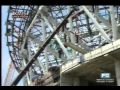
The dome has 55,000 seating capacity and relatively 15 stories high. Evidently encompassing a bowl-shaped design, the edifice was inspired by the look of the narra tree and was covered by a canopy pattern after the thatched top of a traditional nipa hut. The arena has total floor area of 99.000 square meters and took more than two-year time of labor.
The structure was even featured in Discovery Channel's 'Man-made Marvel' with the episode title 'Quake Proof' last December 2013. The show unmasked science as used in the fortification of the building withstand a magnitude-8 earthquake. When subjected to a wind tunnel test, the structure was bared to stand against super typhoons.
Philippine Arena at KMJS
Definition
The Philippine Arena is a multipurpose indoor arena at Ciudad de Victoria, a 140-hectare tourism enterprise zone in Bocaue and Santa Maria, Bulacan, Philippines. It has a maximum capacity of 55,000 people. The Philippine Arena is the world's largest indoor arena. It is one of the centerpiece of the many centennial projects of the Iglesia Ni Cristo (INC) for their centennial celebration on July 27, 2014. The legal owner of the arena is the INC's educational institution, New Era University.
Inauguration
The Philippine Arena, along with Ciudad de Victoria was officially inaugurated on July 21, 2014. Philippine President Benigno Aquino III and Iglesia ni Cristo Executive Minister Eduardo Manalo unveiled the marker of Ciudad de Victoria.
Building Details
Concept
The initial design concept of the Philippine arena is inspired by Narra tree, the mother tree of the Philippines, and the root of the Banyan tree. The roof was inspired by that of a Nipa Hut.
Architecture
Populous, a global mega-architecture firm, designed the arena through their office in Brisbane, Australia. The arena has been master planned to enable at least 50,000 people to gather inside the building and a further 50,000 to gather at a ‘live site’ or plaza outside to share in major events. The arena is a one-sided bowl. The lower bowl will be the most frequently used part of the building and the architectural design allows for easy separation of the lower bowl from the upper tier, by curtaining with acoustic and thermal properties. The seating layout of the arena is different from that of a standard arena where the stage is at the middle and is surrounded by seats. The seating of the arena closely resembles that of a Greek amphitheater, built in a semi-circle with the seats at the sides and front of the arena stage. The seatings are divided into three sections. Each of the sections are colored green, white and red the colors of the Iglesia Ni Cristo flag.
Structure
Built on 99,200 square meters of land and has a dome over 9000 square meters. The roof spans some 170 meters and contains 9,000 tons of steel work. The roof was made as a separate unit to reduce burden on the arena with extra load. The arena is 65 meters in height, or about fifteen stories high and founded on pile construction. For earthquake loads, about a third of the dead load of the building was designed. The building was also divided into multiple structure to strengthen the arena's earthquake resistance.
Landscape
PWP Landscape Architecture, the firm who landscaped the National September 11 Memorial & Museum, designed the landscape for the arena and the whole complex of Ciudad de Victoria. For the arena, a series of outdoor plazas, gardens and performance venues form the setting for the development including: The North and South Arrival Plazas, The Promontory Plaza, The Great Stairs, and Ciudad de Victoria Plaza that are all related to each other with two cross axes (N-S and E-W) that intersect at the Promontory Plaza.
Uses
The arena will not only hold major church gatherings, but will also operate as a multi-use sports and concert venue, capable of holding a range of events from boxing and basketball to live music performances, but no soccer or field events due to its limited size. There is clear "line of sight" for every seat from each tier, even for various arena configurations such as church ceremonies, boxing, tennis, concerts or indoor gymnastics. The Iglesia ni Cristo will allow non-Iglesia tenants to use the arena. The church reserves the right to disallow activities which it sees violate its religious principles, which include gambling-related events and cockfighting. The overall vision of the master plan will eventually see inclusion of shopping centers, a hospital, and large scale residential developments.
Architecture
Populous, a global mega-architecture firm, designed the arena through their office in Brisbane, Australia. The arena has been master planned to enable at least 50,000 people to gather inside the building and a further 50,000 to gather at a ‘live site’ or plaza outside to share in major events. The arena is a one-sided bowl. The lower bowl will be the most frequently used part of the building and the architectural design allows for easy separation of the lower bowl from the upper tier, by curtaining with acoustic and thermal properties. The seating layout of the arena is different from that of a standard arena where the stage is at the middle and is surrounded by seats. The seating of the arena closely resembles that of a Greek amphitheater, built in a semi-circle with the seats at the sides and front of the arena stage. The seatings are divided into three sections. Each of the sections are colored green, white and red the colors of the Iglesia Ni Cristo flag.
Structure
Built on 99,200 square meters of land and has a dome over 9000 square meters. The roof spans some 170 meters and contains 9,000 tons of steel work. The roof was made as a separate unit to reduce burden on the arena with extra load. The arena is 65 meters in height, or about fifteen stories high and founded on pile construction. For earthquake loads, about a third of the dead load of the building was designed. The building was also divided into multiple structure to strengthen the arena's earthquake resistance.
Landscape
PWP Landscape Architecture, the firm who landscaped the National September 11 Memorial & Museum, designed the landscape for the arena and the whole complex of Ciudad de Victoria. For the arena, a series of outdoor plazas, gardens and performance venues form the setting for the development including: The North and South Arrival Plazas, The Promontory Plaza, The Great Stairs, and Ciudad de Victoria Plaza that are all related to each other with two cross axes (N-S and E-W) that intersect at the Promontory Plaza.
The arena will not only hold major church gatherings, but will also operate as a multi-use sports and concert venue, capable of holding a range of events from boxing and basketball to live music performances, but no soccer or field events due to its limited size. There is clear "line of sight" for every seat from each tier, even for various arena configurations such as church ceremonies, boxing, tennis, concerts or indoor gymnastics. The Iglesia ni Cristo will allow non-Iglesia tenants to use the arena. The church reserves the right to disallow activities which it sees violate its religious principles, which include gambling-related events and cockfighting. The overall vision of the master plan will eventually see inclusion of shopping centers, a hospital, and large scale residential developments.
Philippine Arena: New Innovation
The arena's main purpose is to hold religious gatherings, but it will also operate as a multi-use sports and concert venue.
- Populous has designed the 50,000 seat Philippine Arena - the world's largest capacity indoor.
- The arena's main purpose is to hold religious gatherings, but it will also operate as a multi-use sports and concert venue.
The Philippine Arena is the world’s largest mixed-use indoor theatre. Construction was completed in time for the Church’s Centennial Celebration in 2014.
The building’s capacity is its challenge. Situated on a green field site north of Manila, at Ciudad de Victoria, the arena enables 50,000 people to gather inside the building and a further 50,000 to gather at a ‘live site’ outside to share in major events.
The building’s capacity pushes the boundary of Arena design. The form uses geometry to create an elegant appearance while also giving the venue a powerful presence within its setting. Innovative solutions to the technical challenges of size and scale have also moved arena design forward.
This vast scale creates technical challenges, especially as it is a one-sided bowl. It is difficult to have 50,000 people with one focal point, give everyone a good view and create a sense of atmosphere. The tight compact bowl shape helps achieve this with its saddle bowl form, high in the centre and dropping at the flanks. Strategically placed video boards also help with atmosphere and provide additional viewing.
Another challenge was to retain intimacy and make sure the arena never feels empty. The lower bowl is the most frequently used part of the building and the design allows for easy separation of the lower bowl from the upper tier, by curtaining with acoustic and thermal properties. The building has also been designed to cope with large numbers arriving for an event simultaneously. People will be redirected immediately when they enter the front door to avoid major circulation build ups.
Consideration also had to be given to making certain the arena would be comfortable. 50,000 people in a fully enclosed building is a large crowd, and combined with Manila’s humid, tropical climate meant that special measures have been undertaken to ensure the arena is adequately ventilated. The arena is fully air-conditioned, and the required plant space had major effect on the floor planning.
The arena not only holds major church gatherings, it also operates as a multi-use sports and concert venue, capable of holding a range of events from boxing and basketball to live music performances. There are clear sightlines from every seat on each tier, even for various arena configurations such as church ceremonies, boxing, tennis, concerts or indoor gymnastics
The Philippine Arena
 Reviewed by Unknown
on
10:13 PM
Rating:
Reviewed by Unknown
on
10:13 PM
Rating:
Reviewed by Unknown
on
10:13 PM
Rating:

No comments: